How does everyone find macro photography? Me, I’ve fascination and a raft of associated hobbies that provide endless subjects.
And today I’ve come across a new software package that’s made the D.O.F issue somewhat a micro trouble.
Trying out Shinestacker, fee to use and works with Linux so good start, but the real gem is how (relatively) simple and straightforward the UI and process is- unusual experience for me after attempts with Huggin.
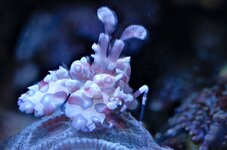
Couple of attempts from today- static subjects really are a must as you will see from my harlequin shrimp attempts using a ‘twist & burst’ method on the D2HS
More experiments to run with this software but so far, very impressed.
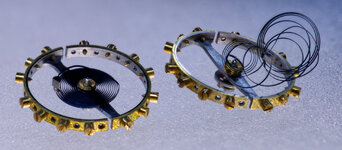
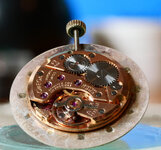
I'm not sure that I have ever mastered the whole stacking problem. Affinity Photo has stacking as an option when your opening a set of images. I usually use a focus rail and try to increment my way from front to real but that ends up with me wondering if I'm not actually changing the perspective. I've used the internal stacking on my mFT bodies and it's OK. A lot of what I've done are flowers and watches.
Thanks Gary- similarly those watch pictures certainly look fantastic- seeing the jewels is impressive!
The way you’ve said with the focus rail sounds like it’s capturing the images to merge- so far I’m using the lens barrel to move from front to back (vice versa) at a fixed f stop to capture the whole subject.
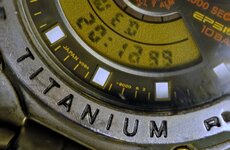
I was inspired by your watch movement images and took a macro of my Seiko.
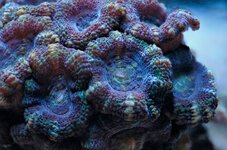
Definitely an agreeable subject compared to corals
Some very nice results. I have not come across either Huggin or Shinestacker. I have always used Helicon Focus and, although I have a license for ZereneStacker too, I have only used it rarely.
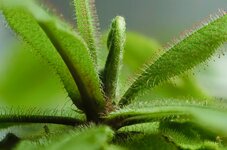
The problem with macro-photography is the narrow depth of field. When you want to show something lik mould growth on a complex structure (rather than a flat panel) it can be quite difficult to relay what can be seen by the naked eye into an image in a report. Stacking can help. However, my main interest is to try and get this to work on a microscope as the DoF is much, much narrower and you cannot focus up and down on a page!
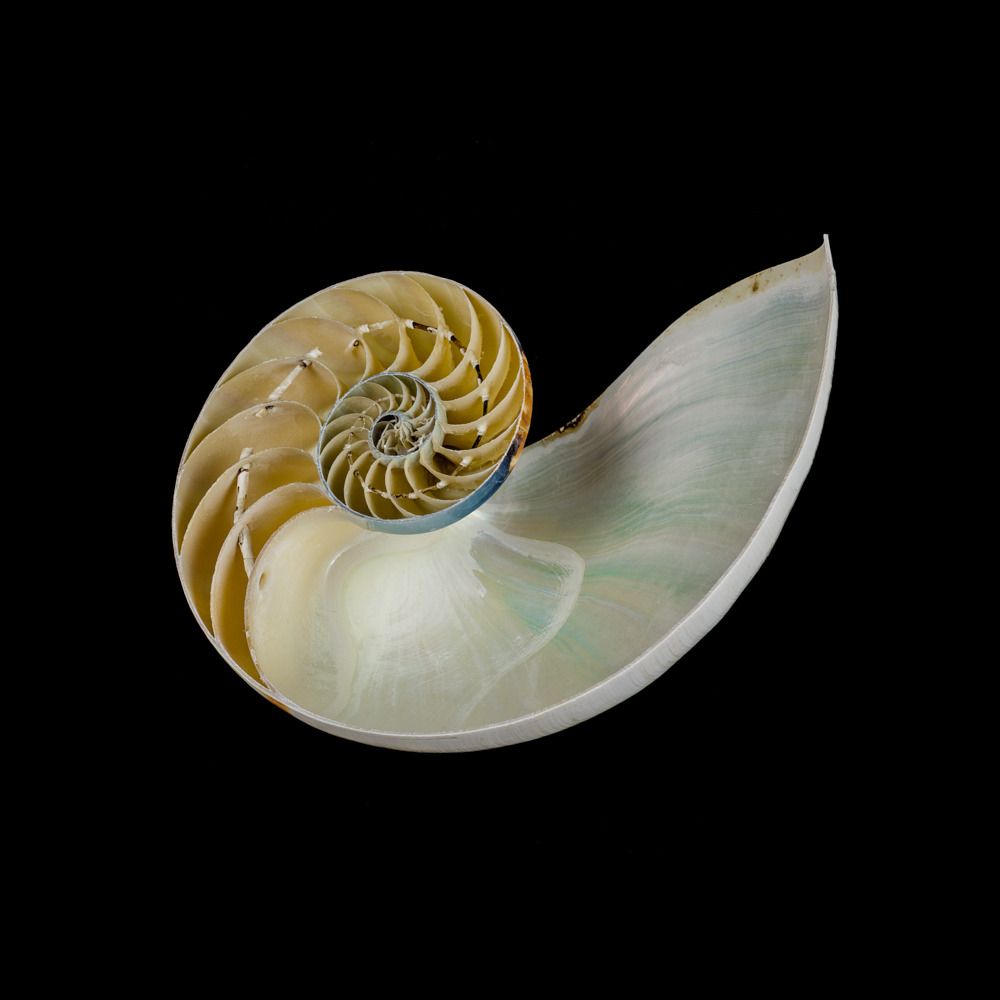
Nikon D3s + 55mm Micro Nikkor. ISO 200, 1/80s at f1:8.0. 50 image stack in 1mm steps combined in Helicon Focus Pro 6.3. PP in LR / PS (canvas size increase).
Someone elsewhere asked how this was done so I thought it might be a good opportunity to create a walk-through.
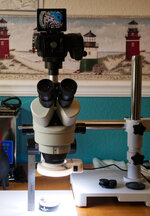
The image below shows the setup. On the Nikon stage attached to the Leica M420 is sitting a small tropical seed about 10 mm in length and 5 mm in width. It is lit with 2 Relio 4000 K spots fitted with polarisers and running at 80% of their output to give good contrast and reveal the surface texture of the seed. The camera at this point is focussed at the lowest point visible on the seed (effectively the edge at the widest point) and I had attached a digital depth indicator to...
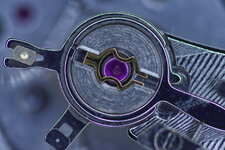
You pinch the brass piece with a set of tweezers and the two legs (on the right at about 4 o'clock) come free from the undercut and then the brass piece pivots up to the left allowing the purple jewel to be removed/replaced.
I think this was shot through the microscope (although that's not what's under the scope in the shot below). Camera is Sony a65.