
Gary R. Smith
Well-Known Member
With red/blue channel swap and some subsequent curve tweaks
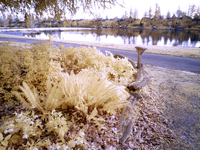


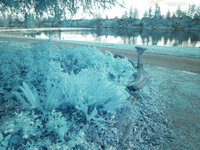

My wife took an iPhone shot because the ferns and the other plants were such an intense greenthe yellow ferns are very interesting and detailed.

I had a Lumix GX85 modified by Kolari.a modified body
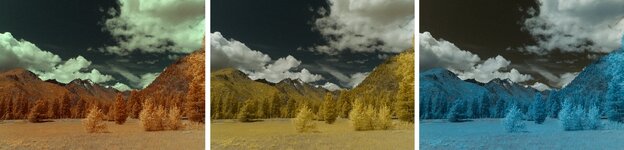

 Don’t let that put you off though as I really do find the images and the various process experiments very interesting. I should use my IR (and UV) cameras more, especially as they are used so little for work these days.
That's an interesting shot. It would be interesting to better understand how prominent her veins were under normal viewing circumstances. I'm not familiar with the behavior of 830nm.
I didn't know that IR would do that. I thought you would need thermal imaging.Pretty much invisible. It is ‘seeing’ the temperature difference.


