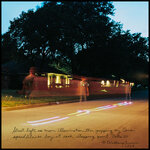
Hi, Vivi, and welcome. You've come to the right shop for advice as Pete, Gary and Beth have demonstrated.
At the risk of repeating some of what they've said here's mine.
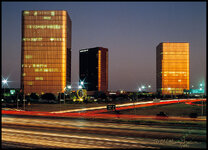
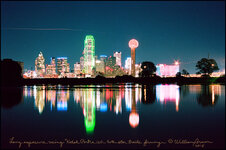
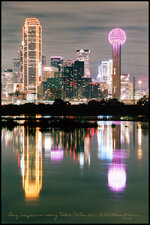
Remember the obvious: it's night time. Your eyes are attuned to it and light sources are not actually as bright as may seem. Sunny sixteen doesn't work here. Take a meter reading if you haven't got a separate meter (I usually manage to forget mine) use your camera close in to the bright area and if you're using digital you can check what white balance is best at the same time. These are tripod shots achieved using that method, time exposures, at ISO 200 I think.
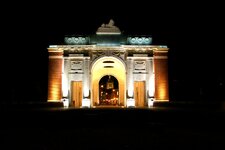
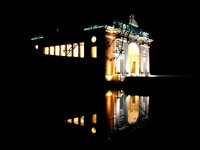
It's worth pointing out that my son was with me when I took these and was too impatient to wait for his turn to use the one tripod we were sharing. He took similar images with a considerably higher ISO without much difference to the end result. You'll have to take my word for that as I don't have his versions to hand.
Film, of course, is a slightly different matter and can be just luck of the draw. Even if the camera has some information in the viewfinder you probably won't be able to see it at night. Here I advantage of a frosty night to capture the textures of this railway crossing. With the camera on a tripod and the shot set up to emphasize the strong leading lines a waited for a train to pass. A frosty night meant that the electrical pick-ups were throwing up sparks from the conductor rail, just enough to fill in the otherwise empty top corners of the frame.
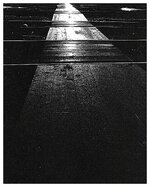
Sadly I have no details of the settings as that dates back long ago and the negatives and notes from those days have been lost. But I do know that I was doing a lot of that sort of thing then which brings me to my last piece of advice. Practise and practise again, making notes as you go to find out what works and what doesn't. Don't let your failures get you down, we all make them.
I hope that helps and best of luck, I look forward to seeing some of your work.